


Finding a job in 2025 felt strangely exhausting. You did everything you were told to do. You updated your resume, applied consistently, prepared for interviews, and waited. And waited. After a while, the silence started to feel personal, even when it was not.
That frustration did not come from a lack of effort. It came from a disconnect between how hiring actually works now and how most people are told to search for jobs. Many candidates followed the rules perfectly, but those rules were already outdated. Automated screening, skills based filtering, and overloaded recruiters quietly changed the game.
The uncomfortable truth is that 2026 is not magically easier. Finding a job this year can still be challenging, especially if you rely on old playbooks. But here is the part most people miss. When you understand how hiring decisions are really made today, the process starts to feel less random and more navigable. That shift alone can change how you approach everything that follows.
If your job search feels broken, that does not mean you are. It usually means the system changed and nobody explained how it works now. This can help you understand what actually matters in 2026, where old tactics fail, and how to rebuild your approach so it fits the reality you are facing today.
The Job Market Reset Nobody Prepared You For
The job market did not slowly evolve. It reset. And it did so without a clear announcement to job seekers.
In practice, this means companies are hiring with far more caution than they did a few years ago. Budgets exist, but approvals take longer. Roles are scrutinized harder. Every new hire is expected to deliver value faster, with less ramp-up time.
At the same time, early hiring decisions are no longer made by humans alone. We are seeing more AI tools popping up in recruitment these days. Instead of talking to recruiters, you will interview with automated screening systems. It is something you are likely to see more of in the years ahead. These systems do not read your resume the way a person does. They look for signals. Skills, patterns, keywords, and evidence that you match what the role needs right now, not what you might grow into later.
Another overlooked shift is volume. One open role can attract hundreds, sometimes thousands, of applicants within days. Recruiters do not have the capacity to deeply review every profile. So they rely on shortcuts. Referrals. Prior experience in similar environments. Demonstrated skills they can quickly verify. This is not true for every company, but experience in similar environments, products, services, or even a competitor can help you get noticed.
This dynamic is strongest in corporate, tech, and knowledge work roles. Trades, healthcare, and locally regulated professions often follow different hiring patterns. But for many office based and remote roles, this reset defines the reality of 2026.
Understanding this change matters because it reframes the problem. If the system has changed, struggling does not mean you are unqualified. It means the way you are presenting yourself no longer aligns with how decisions are made. And once you see that clearly, you can start adjusting with intent instead of frustration.
The Skills That Actually Matter In 2026
One of the biggest misconceptions in job search is that requirements keep getting higher across the board. What actually changed is not the bar, but how it is measured.
In 2026, many employers care less about where you studied and more about what you can do. Skills based hiring moved from a trend to a default. Hiring teams want proof that you can handle real work, solve real problems, and adapt when conditions change.
AI literacy sits at the center of this shift. You do not need to be an engineer, but you do need to understand how AI fits into your role and how to use it. That means knowing how to use modern tools responsibly, how to ask good questions, and how to spot when output needs human judgment. In many teams, this is now assumed, not praised.
Technical skills still matter, but they are evaluated differently. Cloud platforms, data analysis, security awareness, and automation are valuable because they reduce friction. Employers look for people who can work across systems without constant guidance. Even basic fluency can separate you from candidates who rely only on traditional workflows.
Soft skills are where many people underestimate their importance. Clear communication, critical thinking, and adaptability are not “nice to have.” They are risk reducers. In uncertain markets, hiring managers favor people who can explain their thinking, adjust quickly, and collaborate without drama.
Here is the practical reality. Technical skills often get you noticed. Human skills decide whether you are trusted. When routine tasks are automated, judgment becomes more visible, not less.
There is an important limitation to note. Skills alone do not guarantee a job. They need to be visible and credible. That is why how you present them matters just as much as having them. Understanding this prepares you for the next shift, where job search stops being about listing qualifications and starts being about being discovered.
I can’t stress enough how important it is to really understand AI, not just using tools like ChatGPT, but knowing how to get the most out of them. It won’t just help you get more done; people who master AI are exactly who companies are looking for right now.

Learn how to harness AI effectively and get better results every time. You can grab the book on Amazon (Paperback, Hardcover, Kindle) —no matter where you are!
Why Job Boards Rarely Work And What Replaced Them
Most people start their job search in the same place. Job boards. It feels logical, familiar, and productive. You see open roles, you apply, and you hope the numbers work in your favor. The problem is that in 2026, volume works against you, not for you.
When a role is publicly posted, hundreds of applications often arrive within days. Sometimes within hours. Recruiters do not review these in the order they come in. They skim. They filter. They rely on processes to reduce the pile to something manageable. By the time a human looks at profiles, most candidates are already out of the running without knowing why.
Job boards have become visibility traps. They create activity, but rarely momentum.
What replaced them is not one single channel, but a shift in how hiring starts. Discovery now happens before applications. Recruiters and hiring managers search for people, not just resumes. They look for signals that someone understands the space, has relevant skills, and appears credible before any formal process begins.
This is where LinkedIn plays a very different role than most people expect. It is less about applying and more about being findable. Profiles that explain value clearly, show verified skills, and demonstrate thoughtful activity are easier to trust. Even light engagement can influence who shows up in recruiter searches.
This is why it is so important to understand how to make your LinkedIn profile visible.
A realistic scenario looks like this. A recruiter searches for a specific skill set, opens ten profiles, and messages three people who seem aligned. None of them applied to that role. They were discovered.
There is an important caveat. This does not mean applications are useless. It means they should not be your primary strategy. Use job boards to understand demand, terminology, and required skills. Use them to research. But rely on visibility, positioning, and direct outreach to create real opportunities.
Job hunting isn’t only about hitting “submit,” it’s about being seen. While you should definitely keep applying for roles you find, staying active on LinkedIn is a great way to open up new doors. Just don’t forget to double-check your LinkedIn settings before you start job searching.
LinkedIn Search: Find jobs as soon as they’re posted.
This free tool lets you quickly find the latest job postings on LinkedIn, whether they went up in the last hour, 3 hours, 6 hours, or 24 hours, so you can be one of the first to apply.
Proof Beats Promises Every Time
And that naturally leads to the next question. If discovery matters more than applications, what actually convinces someone you are worth a conversation?f
Once discovery replaces applications, one question matters more than any other. Can you actually do the work?
In 2026, resumes still open doors, but they rarely close deals. Hiring managers want evidence. Something concrete that shows how you think, what you build, or how you solve problems when the situation is not perfect.
This is why portfolios, case studies, and work samples carry so much weight. For developers, that might be real projects on GitHub. For designers, it is not just polished visuals, but explanations of decisions and trade offs. For analysts, it is how you turned messy data into insight. For writers, it is published work that shows clarity and voice.
What matters is not perfection. It is credibility. A small project that solves one real problem is often more convincing than years of experience described in vague bullet points. This is especially powerful for career changers or people with non linear backgrounds. Proof shortens the trust gap.
For others, it is important to master the XYZ resume formula!
A realistic scenario looks like this. Two candidates reach the final round. One has a strong resume. The other shows how they approached a similar problem, what went wrong, and what they learned. The second candidate feels safer to hire, even if their background looks less traditional.
There is a limitation worth stating clearly. Proof does not replace interviews. It earns them. You still need to explain your thinking, communicate clearly, and show how you work with others. But without proof, many candidates never reach that stage at all.
If skills get you noticed, proof makes you believable. And once you are believable, the conversation shifts from whether you are qualified to whether you are the right fit.
Using AI Without Letting It Work Against You
AI did not replace job search. It changed the baseline.
In 2026, using tools like ChatGPT is no longer impressive on its own. What matters is how you use them. The difference between candidates who benefit from AI and those who hurt themselves with it comes down to judgment.
Used well, AI compresses time. It helps you analyze job descriptions, spot recurring skill patterns, research companies, and prepare for interviews. It can turn scattered thinking into structured preparation. That alone can improve the quality of your applications and conversations.
Used poorly, AI creates generic output that recruiters recognize instantly. Resumes that sound polished but empty. Cover letters that say everything and nothing. Interview answers that feel rehearsed instead of real. This is where AI backfires.
A realistic example. One candidate uses AI to map required skills across ten similar roles, then rewrites their resume to reflect real experience they already have. Another copies an AI generated resume verbatim. The first looks intentional. The second looks replaceable.
AI works best as a thinking partner, not a shortcut. Ask it to challenge your assumptions, suggest alternatives, or help you practice explaining your decisions. Then apply human judgment. Edit aggressively. Ground everything in your actual experience.
There is an important limitation to keep in mind. AI cannot fix weak positioning. If you are unclear about what roles you target or what value you offer, AI will only amplify that confusion faster.
When you treat AI as support rather than substitution, it becomes a quiet advantage. And when many candidates misuse it, thoughtful use stands out more than ever.
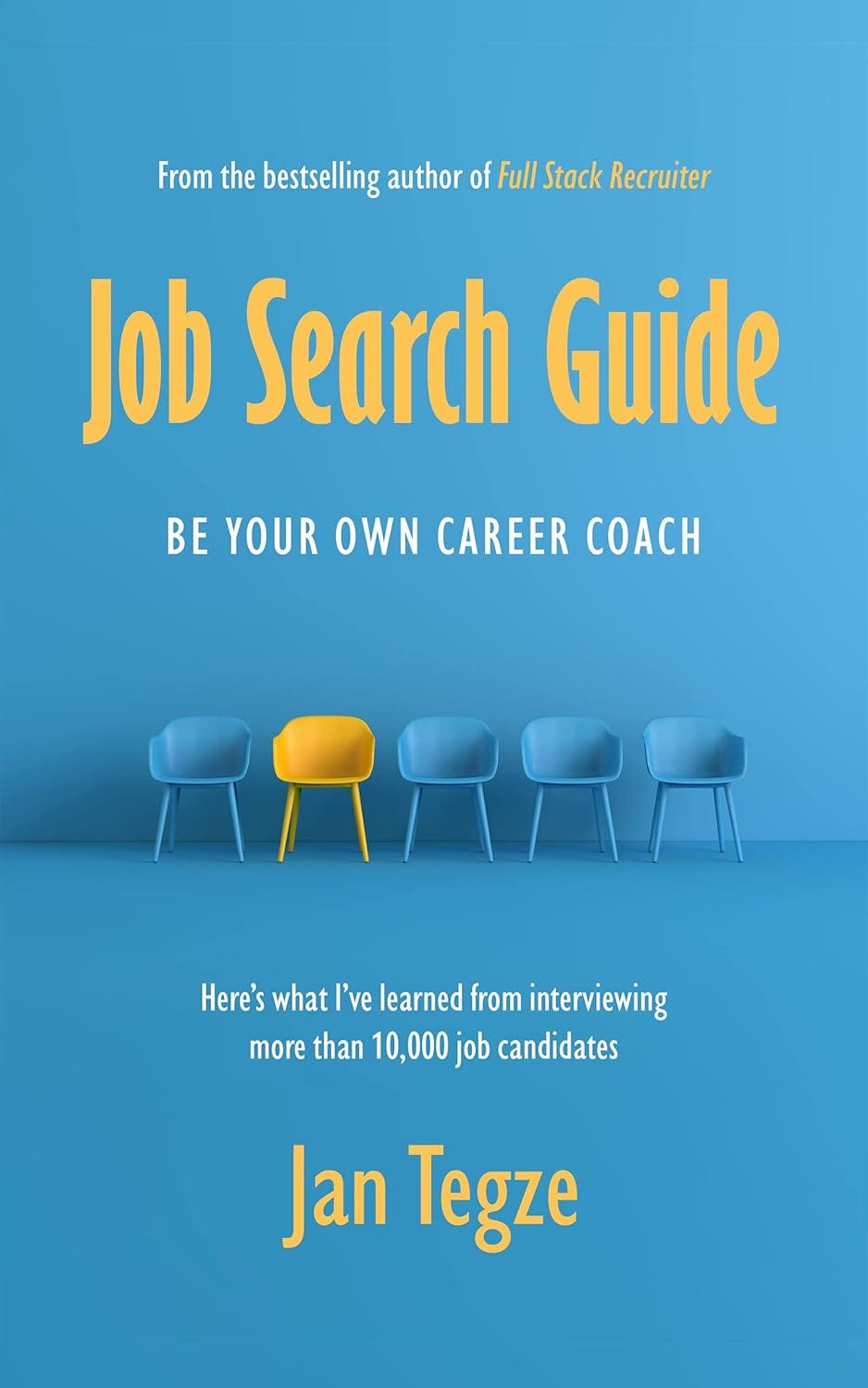
Looking for a new job can feel overwhelming. Job Search Guide makes it simple. This book shows you how to write a CV that gets noticed, prepare for interviews with confidence, and land the offer you want. Written by a recruiter, this book gives you insider tips you won’t find on Google. If you want clear steps, real examples, and proven advice to get hired faster, this is the book for you.
Staying Safe In A Market That Attracts Scammers
Hiring season always brings hope. It also brings scams.
Every January and throughout the year, new budgets open, roles appear, and people start reaching out. Scammers know this cycle well. They rely on urgency, optimism, and confusion about how hiring really works.
Most scams share the same patterns. If someone asks you to send your resume to a private email address like Gmail instead of a corporate one, treat that as a warning sign. Even when the name looks familiar, real companies use real domains. Always visit the website. Fake domains often lead to blank pages, unfinished sites, or generic templates with no substance.
Who you are talking to matters just as much. Legitimate recruiters usually have history. Connections. Activity. Past roles. Scammers often have profiles with almost no network and no visible track record. This is easy to check and worth the minute it takes.
A common tactic is confidence followed by criticism. They show interest, then tell you your resume is not good enough, and quickly recommend a paid resume writer on platforms like Fiverr or Upwork. In many cases, it is the same person behind both messages. The goal is not to help you get hired. It is to extract money.
There is a simple reality check that works in most cases. Real roles have real processes. Companies care about compliance and data protection. That means applications usually go through an applicant tracking system. Agencies may ask for your resume, but they still use professional email addresses and verifiable company identities.
The limitation to acknowledge is that hiring processes vary. Not every deviation is a scam. But when multiple red flags stack up, trust that signal.
Staying alert is not paranoia. It is professionalism. Protect your data. Protect your time. And remember, legitimate opportunities do not require secrecy, pressure, or shortcuts.
2026 Requires Strategic Positioning, Not Luck
The 2026 job market is neither uniformly pessimistic nor generous. It’s selective, favoring those with relevant skills, strategic positioning, and modern job search tactics. The professionals who will thrive are those who recognize that the old playbook, generic applications through job boards, is now largely obsolete.
Success in 2026 demands combining technical specialization with soft skills, leveraging modern platforms strategically, showing your expertise with AI, prioritizing direct outreach and networking over volume applications, demonstrating capability through portfolios and certifications rather than relying on credentials, and maintaining intellectual flexibility as AI reshapes which skills matter most.
The people who move forward fastest are not doing more. They are doing fewer things better. They know what roles they are targeting. They understand what problems those roles exist to solve. And they show, through proof and communication, that they can be trusted to handle them.
There is no perfect system. Hiring still involves timing, luck, and human bias. That will not change. What does change is how much control you have over the inputs. Your skills. Your visibility. Your signals. Your judgment.
A useful next step is simple. Look at your current job search and ask one honest question. If someone discovered you tomorrow, would they quickly understand what you are good at and why it matters?
If the answer is unclear, that is not a failure. It is direction. And once you have that, the job search stops feeling random and starts feeling navigable again.
Strategic Positioning In A Crowded Global Market
You can do everything right and still struggle if you pick the wrong market, timing, or positioning. The bonus section breaks down how strong candidates quietly reposition themselves for faster results.
