


Most job seekers prepare intensely before an interview. They research the company, rehearse answers, read Glassdoor reviews at midnight, and then walk out of the building and immediately try to forget the whole thing happened.
That forgetting is the problem.
Not the nervousness, not the occasional blank mind, not even the rejections. The forgetting is where the real cost lives, because every interview contains information that could make the next one easier. And almost everyone leaves it behind.
What You Actually Walk Away With
The instinct after an interview is to evaluate your own performance. You replay the answer that didn’t land. You wince at the pause that went two seconds too long. You wonder if you should have asked a better question at the end. This is natural, and almost completely useless as a learning exercise, because it focuses your attention on the wrong thing.
The questions you were asked are more valuable than the answers you gave.
Lukáš found this out the hard way. He was applying for operations coordinator roles at logistics companies in Manchester, and he’d had four interviews by the time I heard about his situation through a mutual contact. It was a Thursday afternoon, he was already late for a dentist appointment, and his post-interview process consisted entirely of texting a friend to complain about one question that had caught him off guard. He thought the questions were just the setup, the container, and that the real substance was his performance inside them.
He was treating each interview as a performance review instead of a research exercise. The distinction matters more than it sounds.
Companies in the same industry, hiring for similar roles, tend to ask variations of the same questions. Not because hiring managers are unoriginal, though some are, but because the underlying things they’re trying to assess don’t change much. Can you handle pressure? Do you work well with difficult people? What happens when something goes wrong? A hiring manager at a freight company and one at a mid-size consultancy are both going to probe conflict resolution and resilience. The wording changes. The question underneath doesn’t.
Lukáš’s situation was fairly common. I should mention he was job searching alongside a full-time role, which compressed everything and made the debrief feel even less worth doing. That time pressure distorts a lot of people’s process.
How Patterns Emerge
After three or four interviews, something shifts if you’ve been writing the questions down. A short list starts forming. “Tell me about a challenge you faced.” “Why are you interested in this role specifically?” “How do you handle disagreement with a manager?” They’re not identical. But they’re clearly related.
The first time this happened to someone I know, Lenka, she described it as slightly annoying. She’d assumed each company was doing something unique in their process. Finding out that four very different companies had asked nearly identical questions made the whole thing feel more mechanical than she wanted it to.
She’d been eating leftover soup at her kitchen table, laptop fogging from the steam, when she noticed that question three from Monday and question two from Wednesday were essentially the same question with different verbs. She didn’t feel like she’d discovered a system. She felt mildly cheated.
That quiet shift in perception is still useful, even when it’s deflating. It changes how you walk into the next room.
There are exceptions worth naming. Some technical interviews, particularly in engineering or highly specialized fields, ask questions that are almost entirely role-specific. Structured assessments with HR-prescribed scoring rubrics don’t leave much room for the kind of variability that pattern recognition catches. And some hiring managers genuinely go off-script in ways that are hard to anticipate from any previous experience you’ve had.
But even in those cases, the opening and closing questions follow patterns. “Tell me about yourself” appears in almost every first interview, regardless of industry. “Do you have any questions for us?” ends nearly all of them. The middle is where variation lives. The edges are usually predictable.
Why Preparation Without Data is Just Guessing
There’s a version of interview prep most people recognize. You Google “common interview questions,” find a list of thirty, rehearse answers to the twelve that seem most relevant, and walk in feeling roughly ready. Then the interviewer asks something slightly different from anything on the list, and the rehearsed answers don’t transfer cleanly.
Generic prep lists aren’t wrong. Many of those questions do appear. The issue is that they were compiled from someone else’s experience, often from a broad range of industries and roles that may share almost nothing with the specific job you’re applying for.
Your own list of actual questions from real interviews for real roles in the sector you’re targeting is just better data. It’s not exhaustive. It doesn’t predict everything. But it’s grounded in the actual hiring culture you’re navigating, not a generalized approximation of it. There’s a difference between studying for a test by reading someone else’s notes and studying by reviewing the tests you’ve already taken.
There’s also a psychological cost worth naming. Job searching is exhausting in a specific way. It asks you to perform confidence repeatedly while absorbing repeated rejection. When each interview feels like you’re starting from scratch with no accumulated knowledge, that exhaustion compounds. Every rejection is just a rejection, with nothing extracted from it. The writing habit is one way to close that loop. Not to make rejections easier emotionally, that’s a separate problem, but to make them less opaque. You walked out with something, even if you didn’t get the call.
I’m not sure this fully offsets the demoralizing part of a long job search. Probably not, for most people. But having something concrete to do after an interview that isn’t refreshing your inbox is at least a small improvement on the alternative.
What the System Actually Looks Like
The mechanics are simple enough that spelling them out feels almost unnecessary, but here they are.
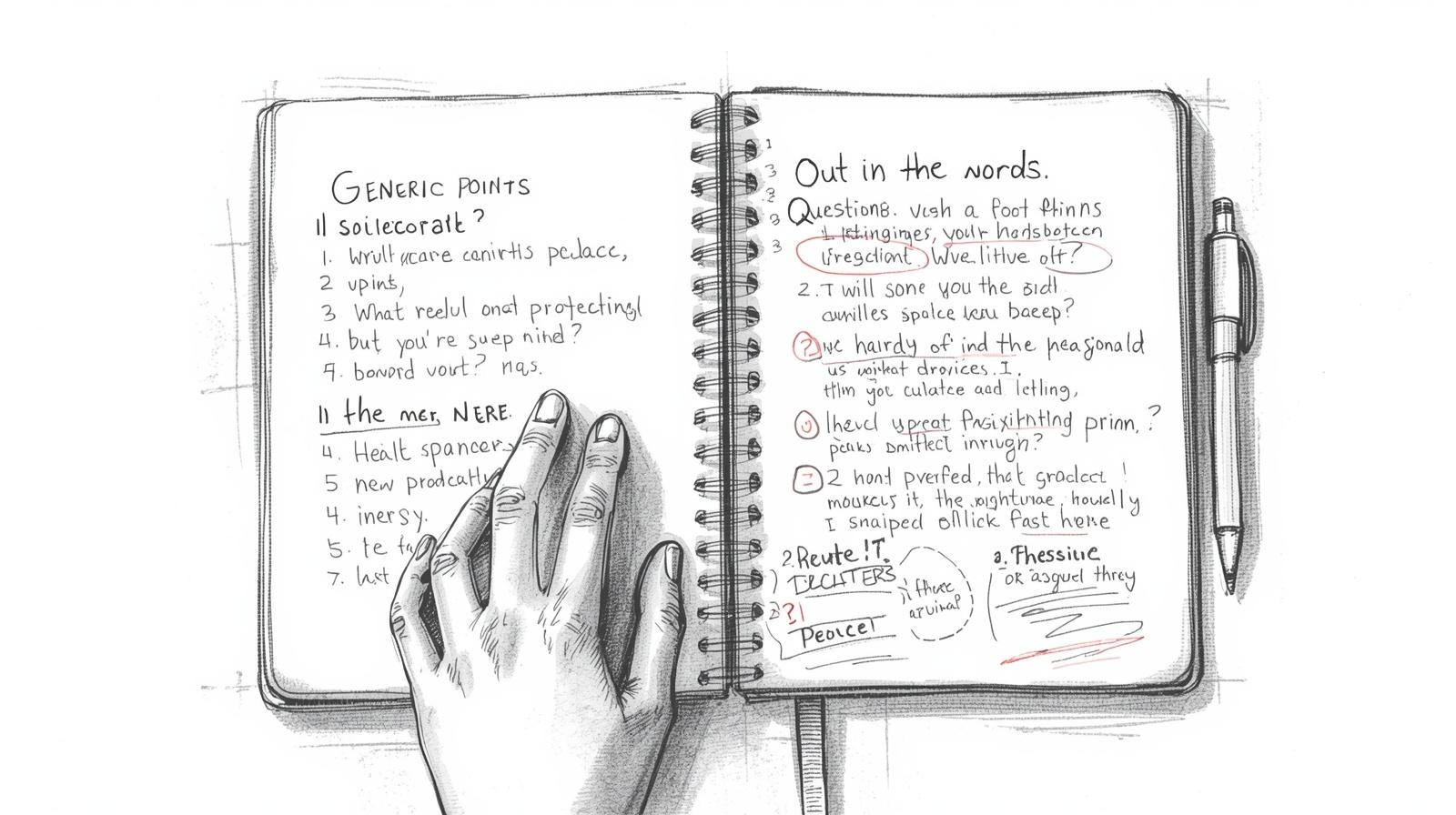
Within an hour of finishing an interview, write down every question you can remember. All of them. Not just the ones that felt significant. Include the opener, include the follow-ups, include the informal question the interviewer threw in while pouring water. Don’t reconstruct exact wording if you can’t remember it. The intent is enough.
Use whatever format doesn’t add friction. A note on your phone works. A running document works. A paper notebook works. There’s no correct medium. What matters is that you do it before memory softens, which happens faster than you’d expect, especially if you go straight into commuting or back to work afterward.
After six or seven interviews, look at the document. Find the questions that appear more than once. Group the variations. Note which answers felt solid and which felt thin. Then use that list as your prep material for the next round, rather than going back to a generic template you found online.
Lenka, when she finally did this across her full month of interviews, realized she’d been asked some version of “describe your leadership style” in four out of six conversations. She’d given four slightly different answers without noticing, because she hadn’t been tracking. That inconsistency probably didn’t cost her any of those roles directly. It’s hard to know. But seeing the question appear four times gave her something specific to fix, and she fixed it before the next one.
Let’s be real, the hardest part is that you have to write things down when you feel your worst. Interviews are draining. The hour after is when you most want to decompress, not document. There will be interviews where you capture almost nothing. Partial records are more useful than none, and the habit builds over time if you don’t treat a missed debrief as a reason to abandon the whole approach.
The Interview That Improves the Next One
Something changes when you stop treating each interview as its own isolated event. The anxiety doesn’t disappear. But it takes a different shape.
Instead of walking in hoping you’ve prepared for the right things, you walk in with a working theory about what’s likely to come up, built from your own experience rather than someone else’s list. That theory will be partially wrong. There’s always a question that catches you off guard. But “partially wrong and aware of the gaps” is a more functional starting point than complete uncertainty.
There’s a less comfortable version of this insight worth including. The pattern you identify in the questions might reveal something about your answers rather than the questions themselves. If “tell me about a conflict you resolved” keeps appearing in your record, and you keep leaving that part of the interview feeling shaky, the question isn’t the problem. The story you’re telling in response to it is. The note-taking habit creates the conditions to notice this. It doesn’t force you to address it. But at least the problem becomes visible.
James, a sales manager between roles a few years ago, told me he’d had seven interviews before he looked back at his notes and realized he kept getting asked about managing underperforming team members. Every time he’d given a slightly evasive answer. He knew why: the situation he was drawing on was complicated and hadn’t resolved cleanly.
He hadn’t told the full version because he wasn’t sure how it reflected on him. But once he saw the question appearing again and again, he had to decide whether to find a different story or find a way to tell that one honestly. He chose the latter. I don’t know if it made a difference to any specific outcome. He got a role eventually, but job searches usually end in a role eventually. He’s probably not representative.
The Document You Wish You’d Started Earlier
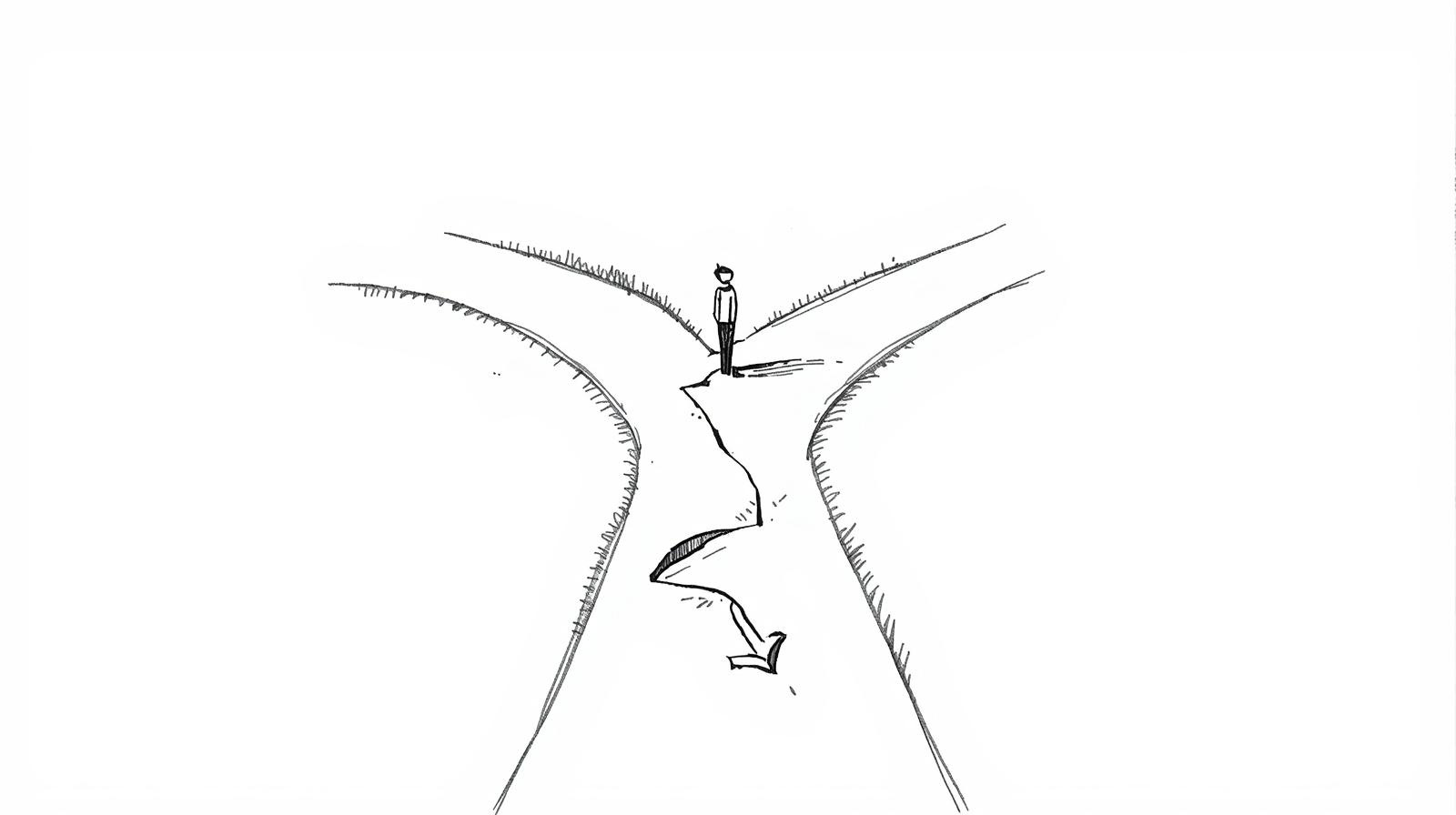
The job search isn’t purely a performance. Or it is, but that framing misses something. It’s also an accumulation of information about what companies look for, how interviewers ask questions, and where your own answers hold up under pressure and where they don’t.
Candidates who tend to get better at interviewing over time aren’t uniformly more polished or naturally confident. They’re the ones who paid attention to what happened and adjusted something before the next round. The adjustment can be small. A different story for one question. A shorter answer to the opener. One prepared follow-up question instead of three generic ones.
The document you build is yours. It travels with you across companies, across roles, across hiring cycles. It gets more useful the longer you maintain it, though useful has a ceiling. Eventually the questions become familiar enough that adding new ones doesn’t tell you much you didn’t already know.
Hiring is still erratic. There are factors entirely outside your control: a candidate already in the pipeline, a budget freeze, a hiring manager who decided in the first four minutes. The document doesn’t fix any of that. But the randomness of the process doesn’t mean there’s nothing to learn from it. There usually is. It just doesn’t write itself down.
Subscribers: The harder problem isn’t capturing the questions. It’s building answers that don’t fall apart when an interviewer pushes back. The premium section covers how to stress-test your stories before you’re in the room, and what most candidates consistently get wrong about the “tell me about yourself” opener that quietly undermines everything that follows.
Building Stories That Don’t Collapse Under Pressure
Once you have a list of repeated questions, the next problem appears. Your answers.
