


You’ve just spent forty-five minutes explaining your background, defending your resume, and demonstrating that you can think under mild professional pressure. The interviewer leans back, clicks their pen once, and says, “Do you have any questions for us?”
And you say, “No, I think you covered everything.”
That answer costs you more than most candidates realize. Not always. Not in every room or with every interviewer. But often enough, and consistently enough across the fifteen-plus years I’ve spent on the hiring side of this process, that I’d treat it as a real risk rather than a neutral non-answer.
What interviewers hear isn’t “this person is satisfied.” What most of us hear, even when we don’t say it out loud, is a version of: this person either doesn’t care enough to be curious, or they weren’t paying close enough attention to form a question, or they’re so exhausted from performing well that they’ve already mentally checked out of the room. None of those reads is fair. I’m aware of that. But hiring is full of unfair reads, and pretending otherwise doesn’t help anyone prepare.
The strange part is that candidates know they should have questions. Survey data, career coaches, every “interview prep” thread on LinkedIn will tell you to bring questions. Most candidates do bring them.
The gap isn’t between people who know the rule and people who don’t. It’s between people who treat the question segment as a formality to get through, and the ones who understand what it’s actually for.

The part of the interview you’re probably winging
Most candidates spend real time preparing for the questions they’ll be asked. They rehearse versions of “tell me about yourself” until the transitions feel smooth. They have a story ready about a conflict with a colleague and a practiced answer about their biggest weakness that doesn’t actually reveal anything alarming. They’ve looked at the job description and mapped their experience to three or four of the key requirements.
The end of the interview? Most people wing it.
This is genuinely strange when you lay it out. You’ve been evaluated for an hour, possibly longer in a panel format. Your working memory is depleted. The adrenaline that got you through the first twenty minutes has done most of what it was going to do. And now, in that state, you’re supposed to shift gears and demonstrate genuine curiosity and forward-thinking interest in the organization, in real time, off the top of your head.
A CareerBuilder survey from 2012 pulled responses from more than 2,500 employers and found that 32% of hiring managers listed failing to ask good questions as one of the most damaging mistakes candidates make during interviews. The same data noted that when candidates don’t have questions, interviewers frequently interpret it as a sign of low interest or low confidence, and often they can’t tell which it is, so they assume both.
I want to be transparent about that source: it’s more than a decade old, and I don’t have updated figures that cleanly replace it. My gut says the percentage is similar now, possibly higher given how much prep material exists and how easy it is to find. When a candidate still arrives without questions in 2026, it stands out more, not less.
There’s a cost on the candidate’s side too that rarely gets discussed. You’ve just spent forty-five minutes answering questions. You have almost no information about whether this job is actually worth your time. The question segment is one of the only moments in the whole process where you can find something real out. Using it to perform completion rather than gather information is a bad trade.
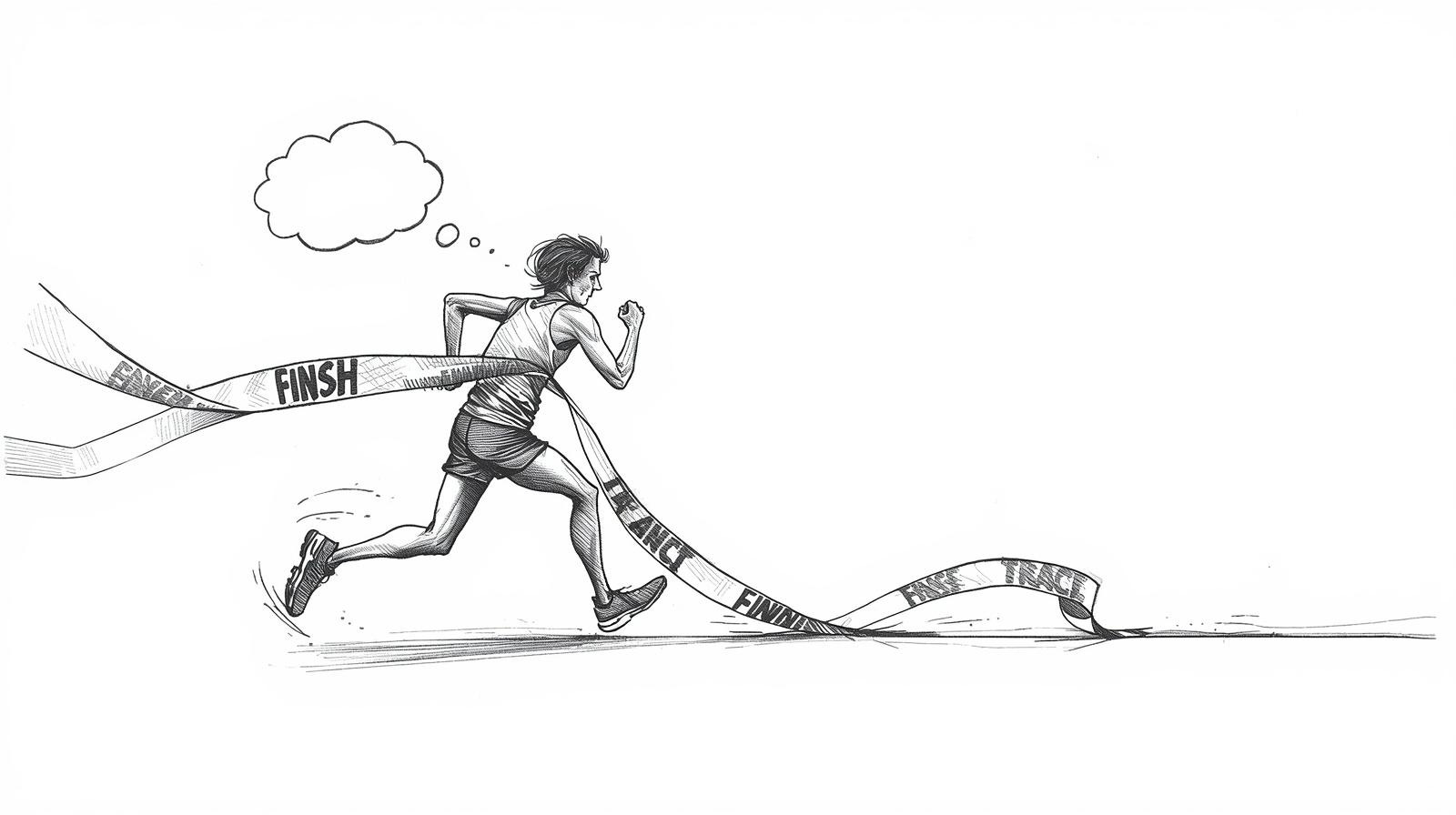
What a study about casual conversation tells us about high-stakes ones
Researchers Alison Wood Brooks and Karen Huang at Harvard Business School published a study in 2017 in the Journal of Personality and Social Psychology that looked at question-asking across multiple live conversation studies. The finding was consistent: people who ask more questions, particularly follow-up questions, are better liked by the people they’re talking to.
The mechanism is worth understanding. The researchers found that question-askers are perceived as more responsive, a construct that captures whether someone appears to be listening, understanding, and engaged. They also found something counterintuitive: people who focus on talking about themselves to make a good impression are typically liked less than people who redirect attention through questions.
There’s an obvious limitation here. The studies were about casual conversation, not interviews. The power dynamic in a job interview is not remotely similar to two people chatting. Whether the same mechanism holds when one person controls the outcome and the other is actively trying to impress them is genuinely unclear to me. I’ve looked for interview-specific research that replicates this finding and haven’t found anything I’d confidently cite.
What I do think transfers: the point about talking about yourself. Most of the interview, by design, is you talking about yourself. Your background, your decisions, your results. The question segment is structurally different. It’s one of the few moments where you’re directing the conversation rather than responding to it.
Candidates who use that moment well tend to leave a different impression than candidates who treat it as a cool-down lap.

One good question beats five prepared ones
The conventional advice is to bring five or six questions and ask as many as time allows. This isn’t wrong. But it produces a specific kind of candidate behavior that interviewers can recognize from a distance.
Ondřej went through a director-level search at a mid-size logistics company two years ago. He had performed well technically, asked what the colleague described as “genuinely good questions,” and then didn’t get the offer. In the debrief, someone on the panel mentioned that his questions had felt rehearsed. Not wrong, not bad. Just clearly pulled from a list rather than from the conversation that had just happened. The panel read it as a signal that he was running the same interview at five companies, which was probably true. (He found out about this as his friend was a recruiter in that company).
I’m not sure that read was fair either. Running multiple processes simultaneously is just how job searches work. But interviewers notice when your questions could have been asked before you walked in the room versus after forty minutes of talking to this specific team.
The best question I ever watched a candidate ask came after the hiring manager mentioned, almost offhandedly, that the team had recently shifted from quarterly planning to six-week sprints. The candidate paused and said, “That’s a significant change. How has that affected how people prioritize when the sprint and the quarterly target conflict?” The hiring manager spent ten minutes answering that question. The candidate barely spoke for the rest of the interview.
One specific, responsive question that comes from actually listening will almost always outperform a list of six prepared questions delivered methodically. The list signals preparation, which is good. The responsive question signals that you were present, which is better.
This doesn’t mean don’t prepare. It means prepare enough that your attention isn’t occupied with remembering your questions. When your prep is solid, your listening has room to operate.
The strange theater of mutual evaluation
There’s something about this whole ritual that I’ve never fully resolved, and I’m going to take a short detour to say so.
The “do you have any questions” moment is nominally your chance to evaluate the employer. In practice, you’re still being evaluated. Both people in the room know this. Nobody says it. You’re performing genuine curiosity while also being genuinely curious, and the interviewer is simultaneously answering your questions and observing how you ask them. The whole thing is a kind of agreed-upon fiction that something like a real exchange is happening.
I’m not sure this is uniquely problematic. Most professional interactions have a performance layer. But it does make the advice “just be authentic” feel incomplete. Authentic curiosity is good. Authentic curiosity that also reflects well on you, after an hour of being assessed, when you’re tired and slightly flooded with cortisol, usually requires some structural support. The preparation isn’t a substitute for genuine interest. It’s what gives genuine interest somewhere to go when the conditions aren’t ideal.
I bring this up partly because I think candidates who feel like their prepared questions are fake are sometimes abandoning good preparation unnecessarily. The questions can be prepared and real at the same time. If you’re genuinely uncertain about how the team handles disagreement with leadership, and you wrote that question down before the interview, it’s still genuine when you ask it.

What you’re actually signaling in those last three minutes
Reducing this to “signals interest” undersells it. What the question segment actually does, when it works, is confirm something that was already forming across the whole conversation.
Interviewers don’t make final decisions based on one sharp question. But a weak ending can undercut a strong interview more than candidates expect, because endings are what we remember. There’s a body of research on what psychologists call the peak-end effect, the finding that we evaluate experiences primarily based on the most intense moment and the final moment, not the average across the whole thing.
Whether that applies cleanly to interviews, I’m genuinely not certain, but it’s consistent with what I’ve observed in practice: a flat ending to a strong interview creates a faint residue of uncertainty in debrief conversations.
The flip side is also true. A sharp, specific question near the end can improve the memory of an interview that was uneven in the middle. I’ve been in debrief conversations where someone said “their question about the budget cycle showed more commercial awareness than anything else they said,” and watched the room’s assessment shift slightly. This is probably not rational. It happens anyway.
It’s also worth putting the influence of this moment in perspective. Decades of research in industrial-organizational psychology show that structured interview performance, the behavioral examples you give earlier in the conversation, and how consistently interviewers evaluate those answers tend to drive hiring decisions far more than anything that happens in the closing minutes.
The classic meta-analysis by Frank Schmidt and John Hunter (1998) found that structured interviews are one of the strongest predictors of job performance among common selection methods.
In other words, the quality of your answers across the interview matters far more than the single question you ask at the end. What the final moment often influences is not the decision itself, but the interviewer’s overall impression when the conversation is fresh in their memory.

Before you walk in the room
The simplest version of the advice: go in knowing why you want this specific role at this specific company, and let your questions come from that answer.
Not as a performance, not as a strategy. Because if you can’t identify anything specific when you’re sitting in your car or at your kitchen table with time to think, you’re going to find it very hard to generate genuine questions under pressure. The prep is what makes the spontaneity possible.
I’d suggest two or three questions that you actually want answered, not questions that make you look good, questions where you’re genuinely curious about the answer. And then go into the interview paying close enough attention that something they say generates a follow-up you didn’t write down.
My favorite question to ask is: ‘What does success look like in this role at 90 days, and what separates the people who thrive here from those who don’t?’ It does three things at once - shows you think in outcomes, signals you are serious about performing, and reveals whether the team actually has clarity on what they need.
The goal is not just to impress, it is to mutually qualify. The best interviews feel like two sides figuring out if this is the right fit, not one side auditioning.
Markéta, a former client of mine, used to send herself a voice memo before every final-round interview with three things she was actually wondering about the job. Not polished questions, just genuine uncertainty she had. She said it took about four minutes, usually in a parking garage with her phone against her chin because she’d waited until the last possible moment.
Whether that process was the reason she converted final rounds at a higher rate than most people I’ve worked with, I can’t say with any certainty. Correlation, maybe. The habit seemed to help her feel less like she was performing at the end and more like she was still in a conversation.
There’s a version of the counterargument I should acknowledge: for some roles, particularly very senior ones, the dynamic shifts in ways this advice doesn’t fully account for.
At a C-level search or a board-level panel, asking about what’s been harder than expected can read differently depending on who’s in the room. I don’t have a clean rule for that adjustment. I’ve seen it work and I’ve seen it land awkwardly, and I haven’t identified the variable that explains the difference.
What I do know is that no questions, or visibly generic questions, rarely lands well in any room. The floor is easy enough to clear that there’s no reason to leave it on the table.
What to Ask When You Genuinely Can’t Think of Anything Real
These questions work for a few reasons. They produce honest answers more reliably than almost any other question type, which means you're getting real information rather than a polished pitch.
Not because you’re unprepared, but because the interview went well and covered ground you’d planned to ask about. You’re slightly out of material. The worst move is to ask a question you clearly don’t care about. The second worst move is to say nothing.
